ASOS
Re-consenting the right way
Background
In 2018 the general data protection regulation (GDPR) came into law, forcing companies to rethink the way they were asking people for their consent and using their data. At ASOS, this legal change led to the realisation that a very large and very valuable database of people were now unlawfully consented into marketing and would need to be removed from the database within 6 months unless they were legally re-consented. I was brought in to work with marketing, compliance and data teams to create the journeys that would be compliant help mitigate this business risk while being customer-led.
Highlights
Our re-consent journeys reduced financial risk by
58%
Outperformed comms consent targets by
70%
Increased comms opt-in at registration by
98%
Understand the problem
As part of the legal changes to data protection made by the EU, many UK companies had to rethink their data storage, privacy policies and customer communications strategies.
While ASOS had already taken steps towards being more GDPR compliant in their comms by changing from an opt out to an opt in model earlier in the year, there were hundreds of thousands of subscribers that had opted in, in a soon-to-be non compliant way. These subscribers were worth millions to the company and losing them would have a direct financial impact.
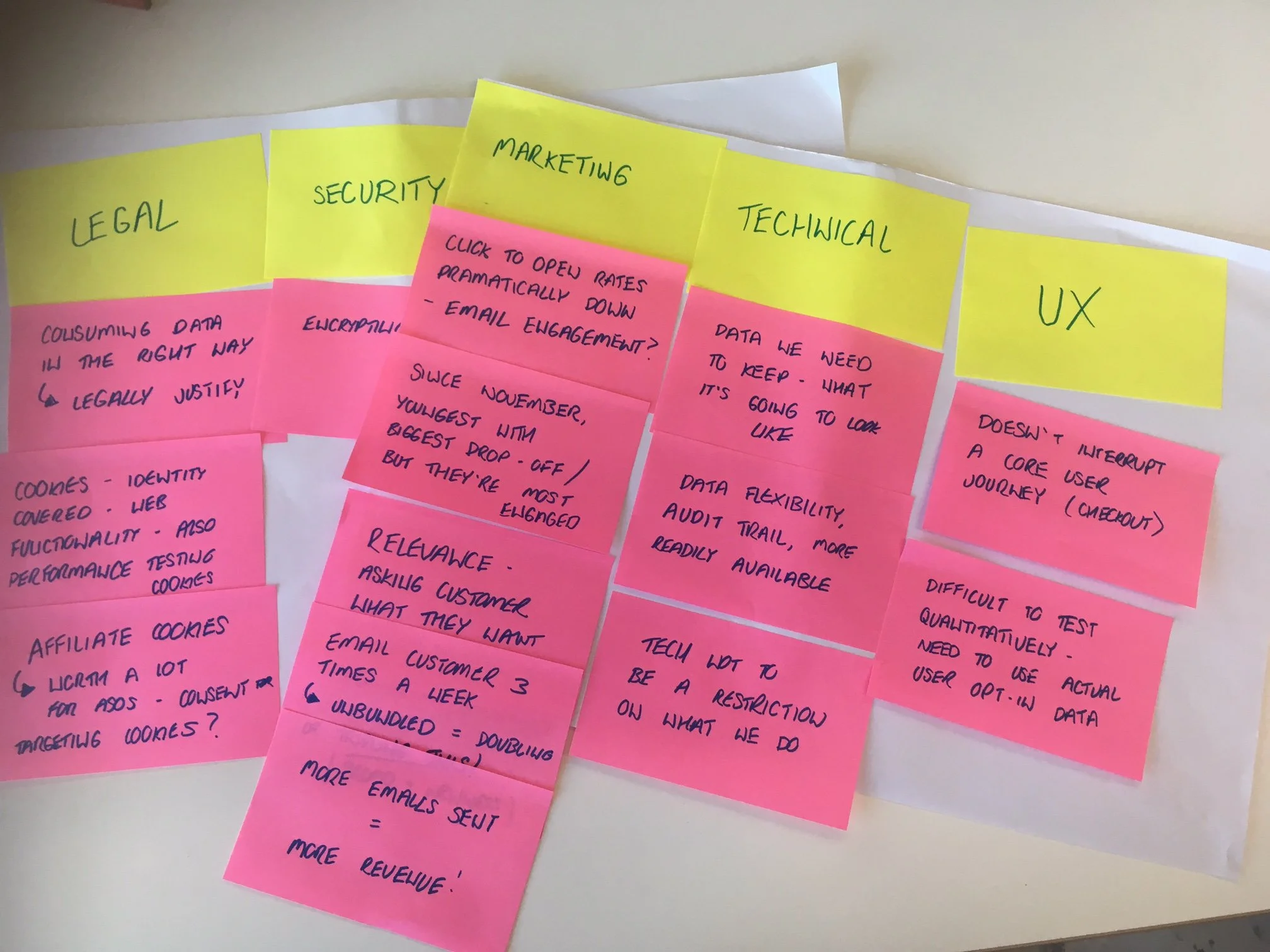
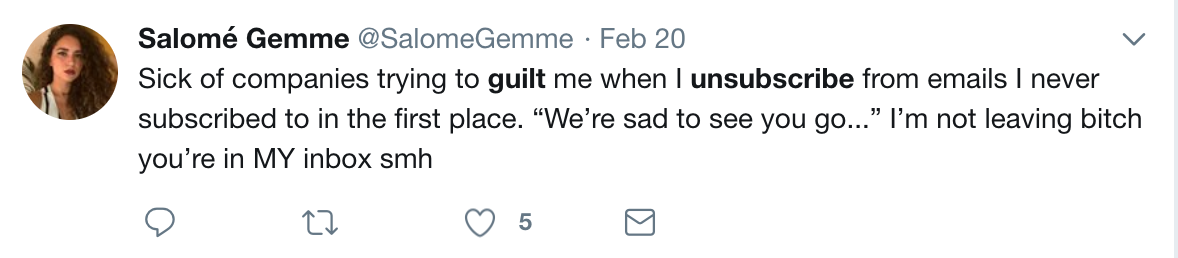
The Challenge
Legally, we needed to re-consent thousands of users into marketing comms and needed to do this in a way that was:
highly effective to minimise business risk
user-friendly and non-intrusive to customers’ core journeys
adaptive to different user groups
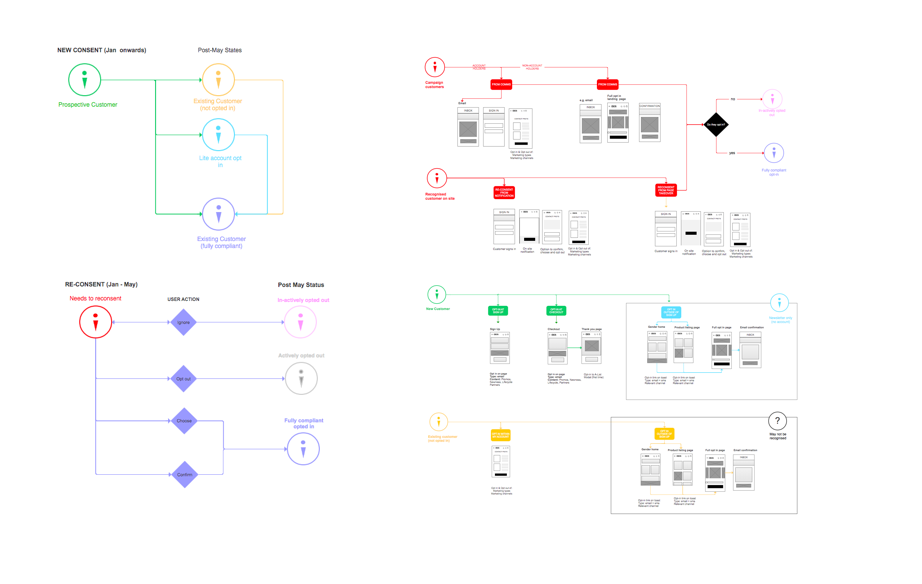
While the CRM & tech. team worked to segment users into those who needed to be to be able to recognise who was opted into what, I designed bespoke journeys for the different kinds of customers depending on their level of opt-in, which were:
Customers who would lose all comms after the deadline if opted out
Customers who were opted in legally but had not chosen specifically what they wanted to hear about
New customers who hadn’t opted into anything.
The Opportunity
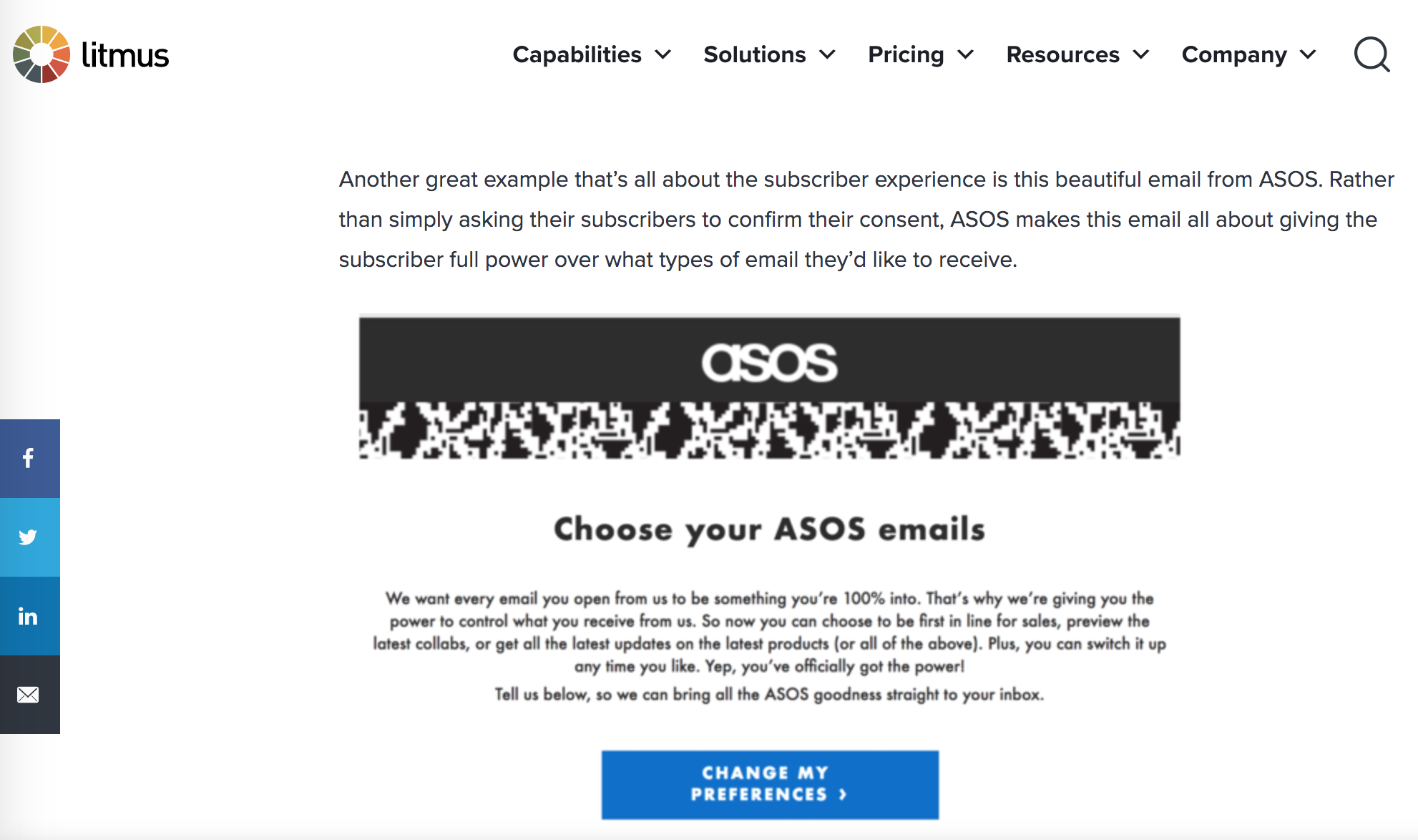
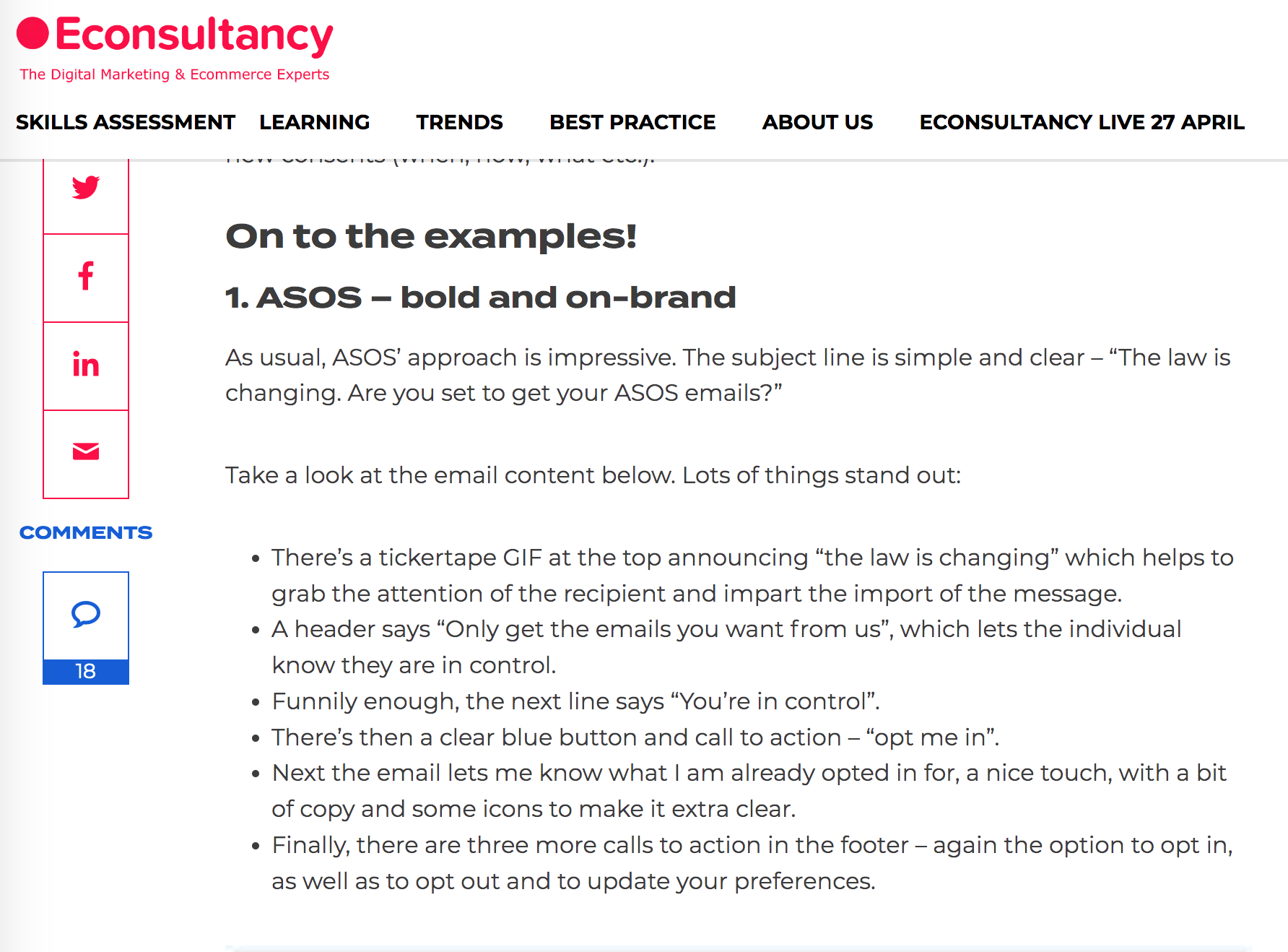
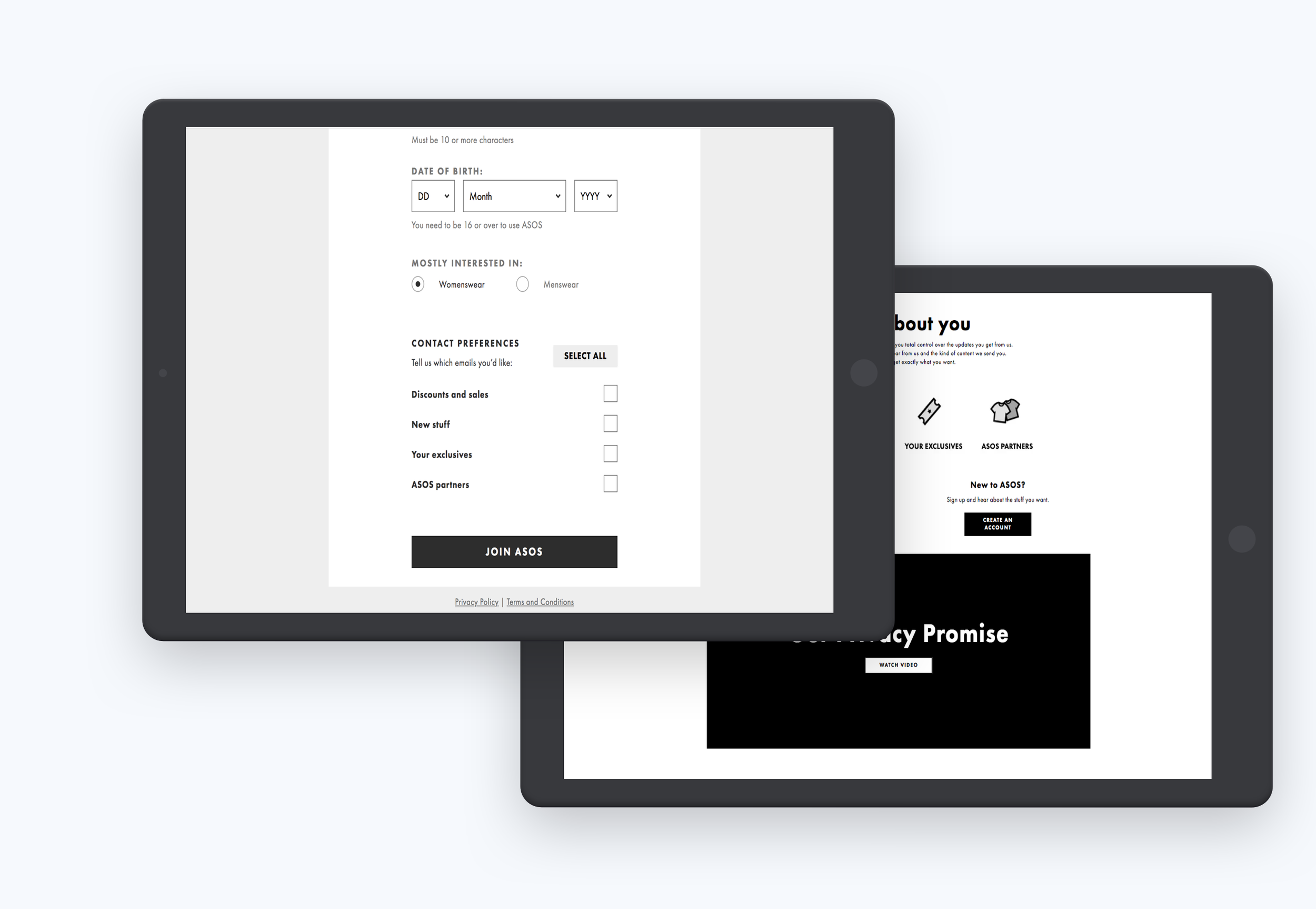
ASOS Marketing teams took this as an opportunity to unbundle and get better at comms, making this a more attractive proposition than just re-consenting to existing emails. We focused on giving new and existing users the chance to make better informed choices about which emails they get.
The Process
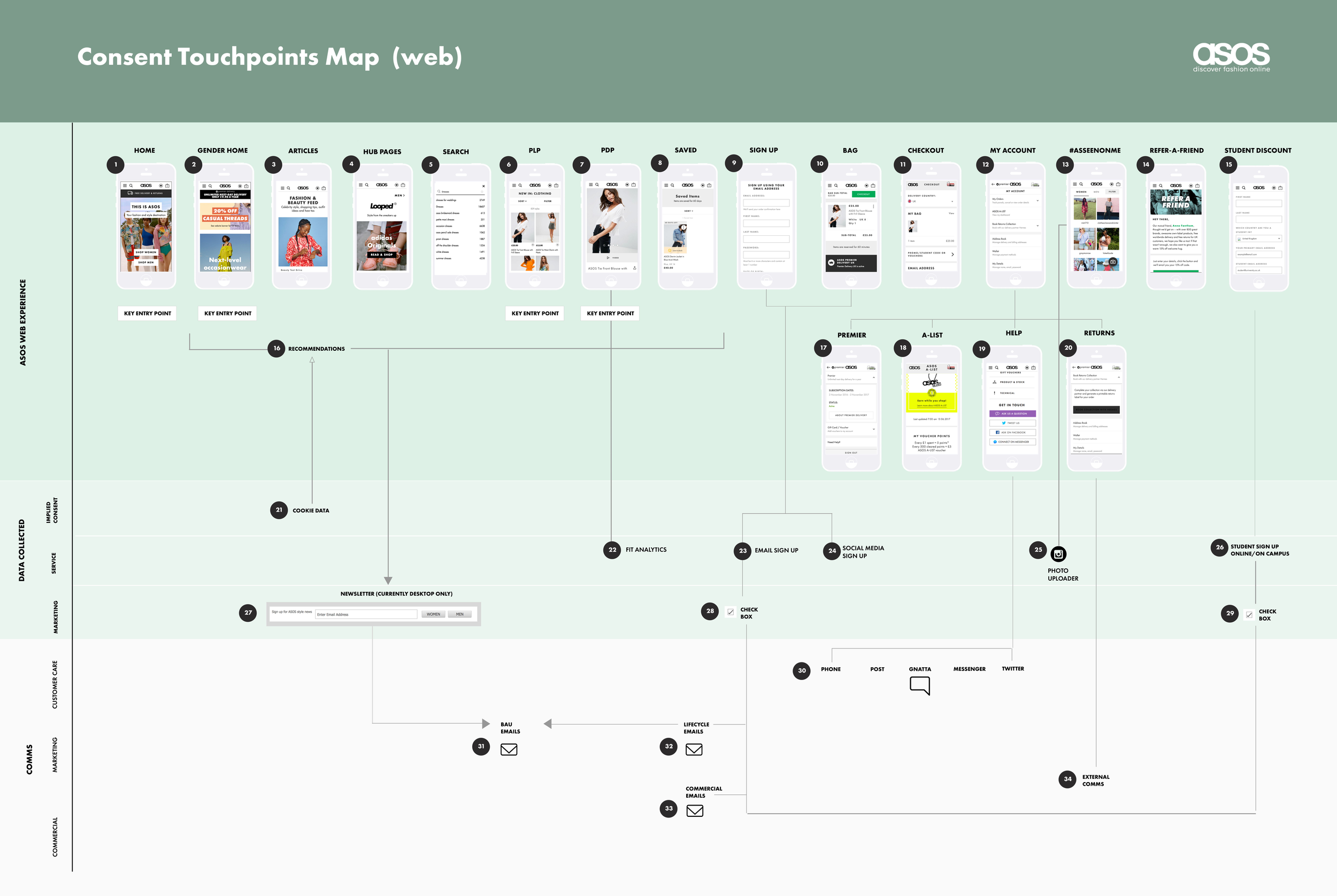
This project entailed deep collaboration with many areas of the business: legal, CRM, tech and compliance. We weren’t just redesigning some tick boxes. We were designing the best ways to consent and re-consent millions of customers in a way that was legal, secure and engaging and that was personalised for different user groups dependent on their needs and also the business risk of losing them. We viewed GDPR as the rocket that was needed to give customers more choice about the type of content they want and how they want to receive it.
UNDERSTAND - DESIGN - ITERATE
The first thing with a project of this scale is to understand the requirements from the business and the users. I needed to understand the business needs from all angles before starting to put together the initial flows.
With several workshops and info gathering sessions I started on some user journeys, designed some basic wireframes and created some conceptual prototypes to start the process and facilitate conversation.
STAKEHOLDER FEEDBACK and user testing
As the project touched so many areas of the business there was be an awful lot of feedback so I had to balance that with user needs and the most pragmatic option. Sometimes the seemingly more creative and more attractive approaches chosen by the business weren’t easily understood by users leading to less effective conversion so we needed to strip it back.
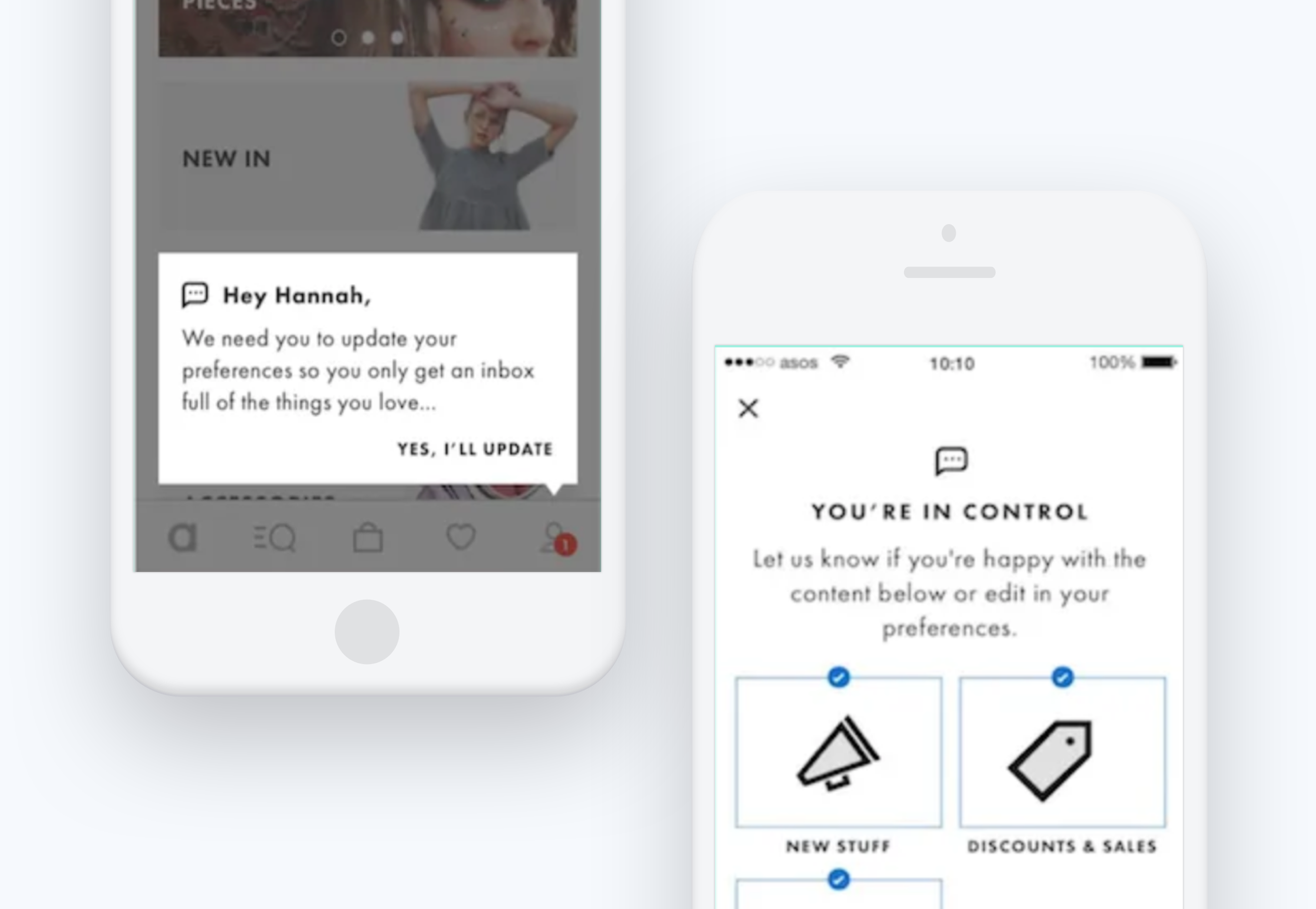
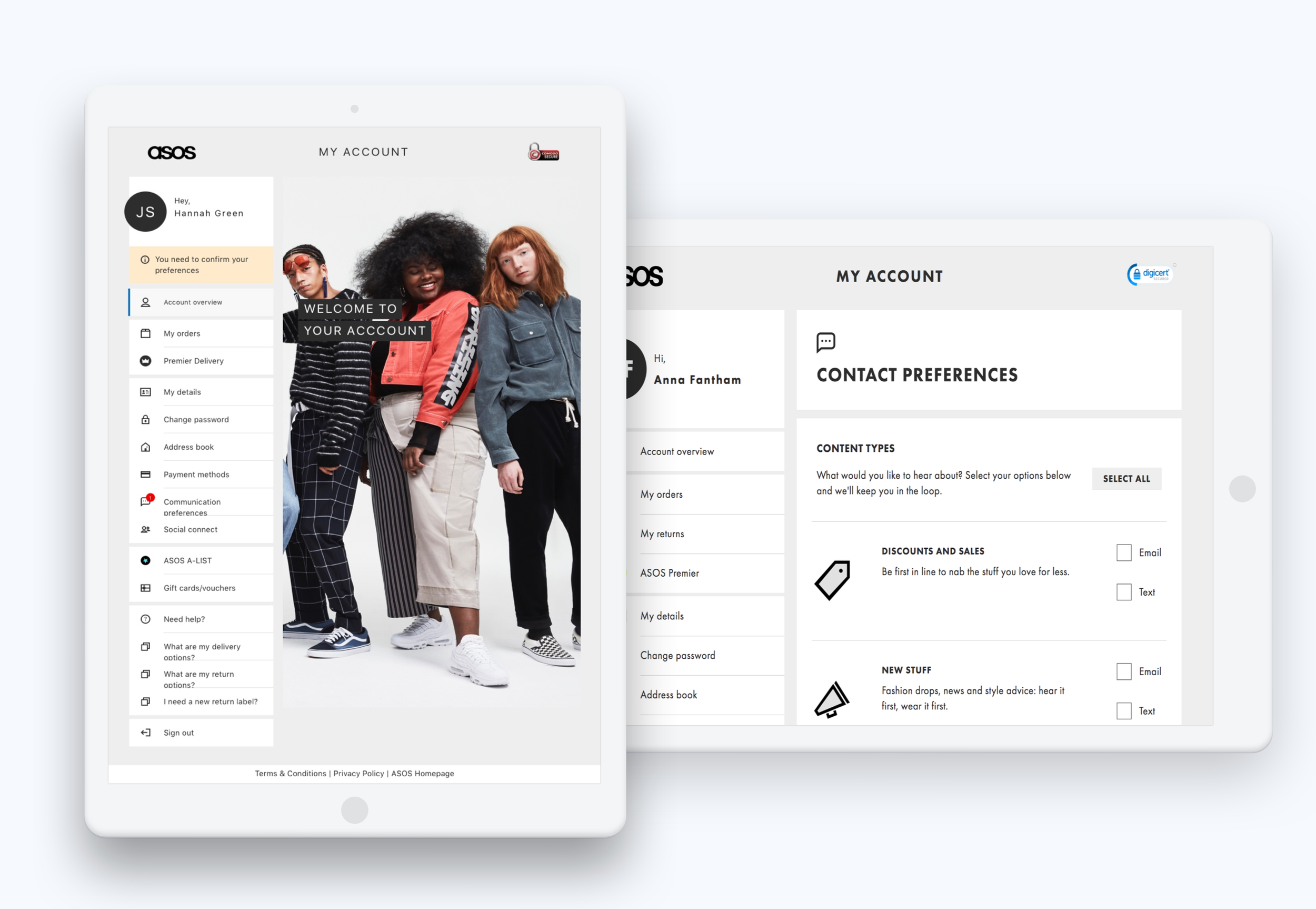
We also understood that users would enter this journey multiple ways and we needed to make sure the journey was appropriate to what they were doing and that no matter the entry point, they understood what they needed to do and could opt in or withdraw consent at any point. Using a combination of banners, notification and microcopy within their account pages we gently nudged customers to re-consent their preferences.
CONTEXTUAL DISRUPTION
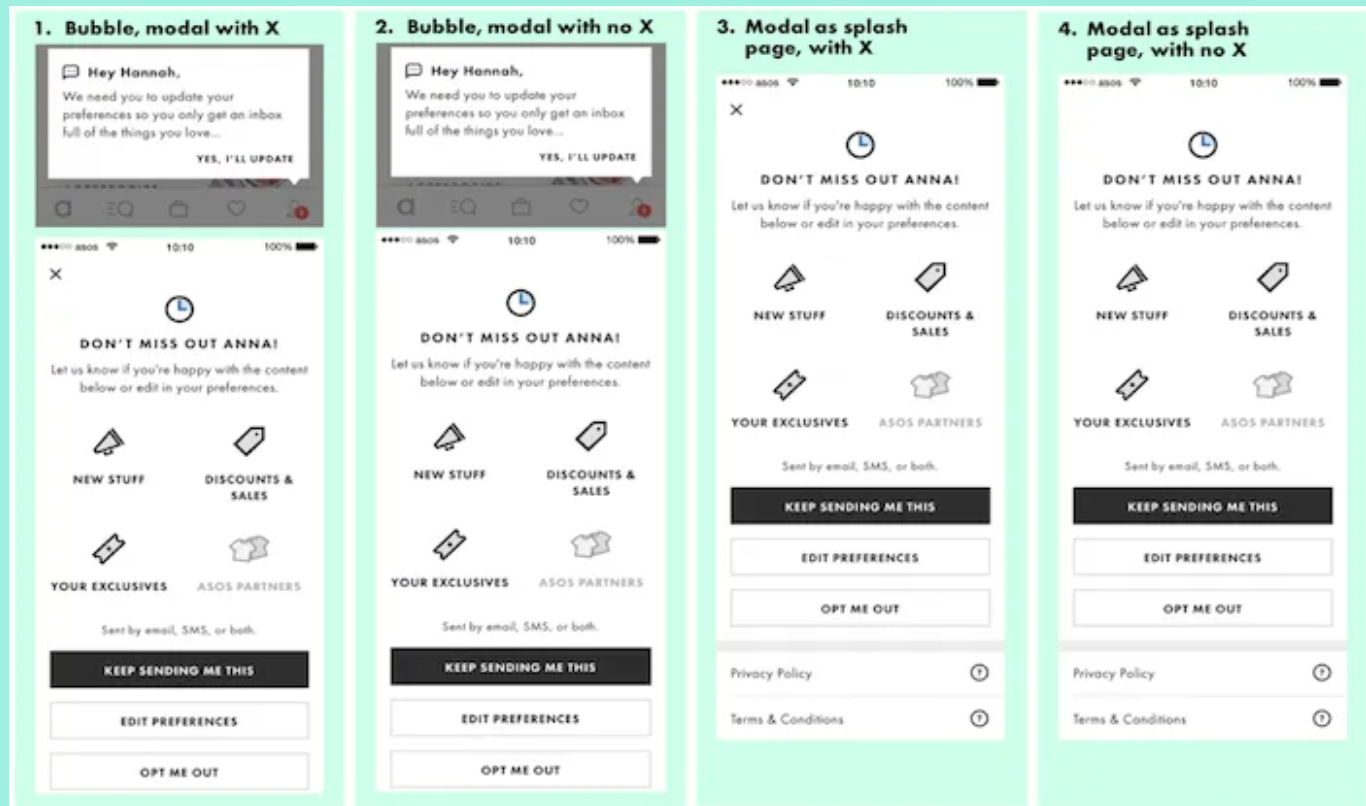
I worked very closely with the marketing team at ASOS to ensure our messaging was noticeable without annoying them. We tested various levels of interruption, initially through user testing and later through A/B testing variants where we not only tested conversion rates (how many people re-consented) but also impact on other areas of the user journey - app closures and add to bag and chose a staggered approach become more intrusive as the deadline approached.
THE RESULTS
The new design improved opt-in at registration by 98% and while we still lost some of the database, we re-consented well above target, saving the business millions in revenue. We also garnered plenty of praise for our customer-first approach to re- consent.