ASOS
Designing Enki, An AI-Powered Personal Fashion Assistant
As the UX Architect for the Conversational Commerce team at ASOS, I designed a chatbot that would help ASOS customers get regular personalised recommendations through to their Facebook Messenger app.
With our ethos of experimentation, lean development, failing fast and innovating we were able to quickly design, test, release and repeat.
We worked with Facebook to make sure that we were designing a bot that met best practice guidelines set out by Facebook and worked closely with other parts of the business to make sure we were staying true to ASOS’s tone of voice and keeping our data secure.
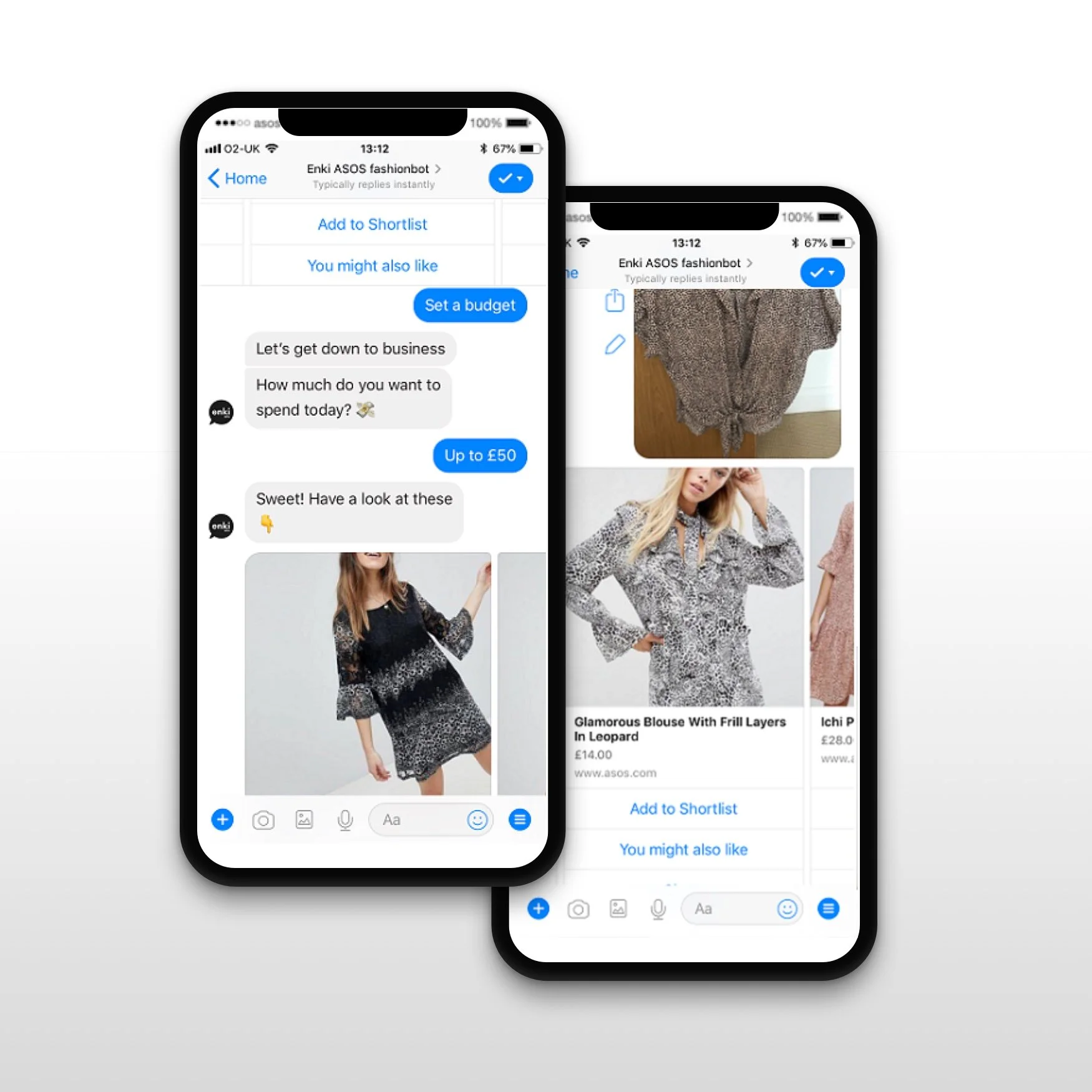
SHOPPING THROUGH CONVERSATION
Initially, we researched competitors, and looked at the different needs of users on our app.
We asked questions and looked at how our users interacted with friends on whatsapp when it came to fashion, and how they would talk to ASOS on twitter, Facebook and instagram.
We workshopped some ideas and did user testing with rapid prototypes, using prebuilt prototypes and paper and saw where conversations could go. We were very aware that it would not always go the way we expected and it was a great way of learning how we might taylor the journeys to set expectations. We also were very aware that not everyone was going to approach ASOS wanting to chat about fashion.
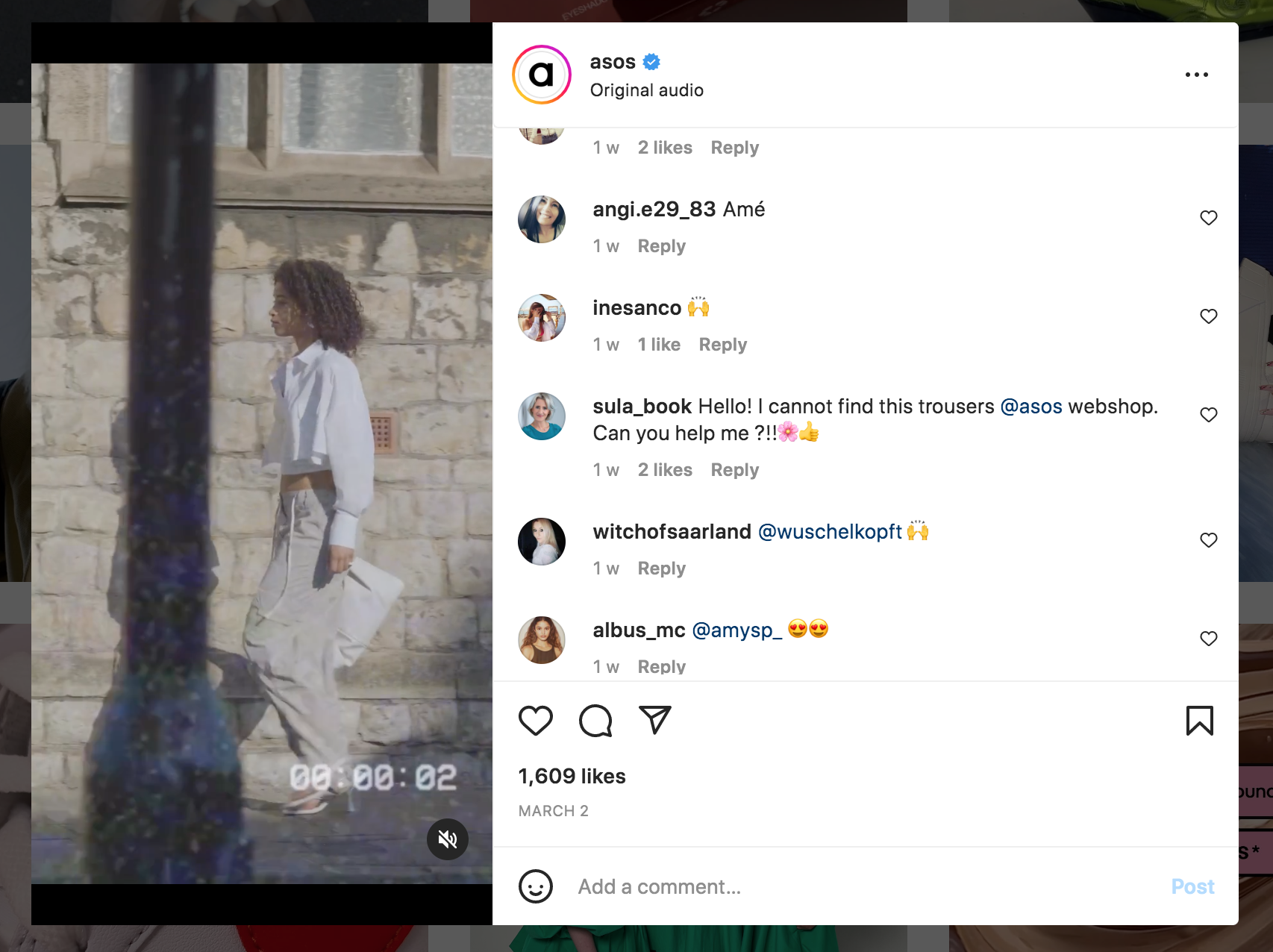
FINDING THE BALANCE: TONE, FUNCTION AND TRANSPARENCY
We tested continuously throughout the project. From early prototypes to releasing new features to experimenting with ideas.
When user testing this our users ranged from super excited about talking to ASOS to doubtful about a chatbots ability to do something useful.
We didn’t want the excited users to be disappointed that Enki couldn’t pick them an outfit, tell them they looked amazing and be their wingman/woman on their next date - because that was how they viewed ASOS.
Similarly, we didn’t want the sceptical users to feel like they there was no point giving Enki a go because chatbots just weren’t that interesting. So we needed to make Enki immediately exciting but transparent and realistic. Plus, we still needed to get the legal bit in and not make it too longwinded. Phew. Coming from a content background, I worked closely with our branding team to come up with the right copy.
INTENT-DRIVEN CONVERSATION DESIGN
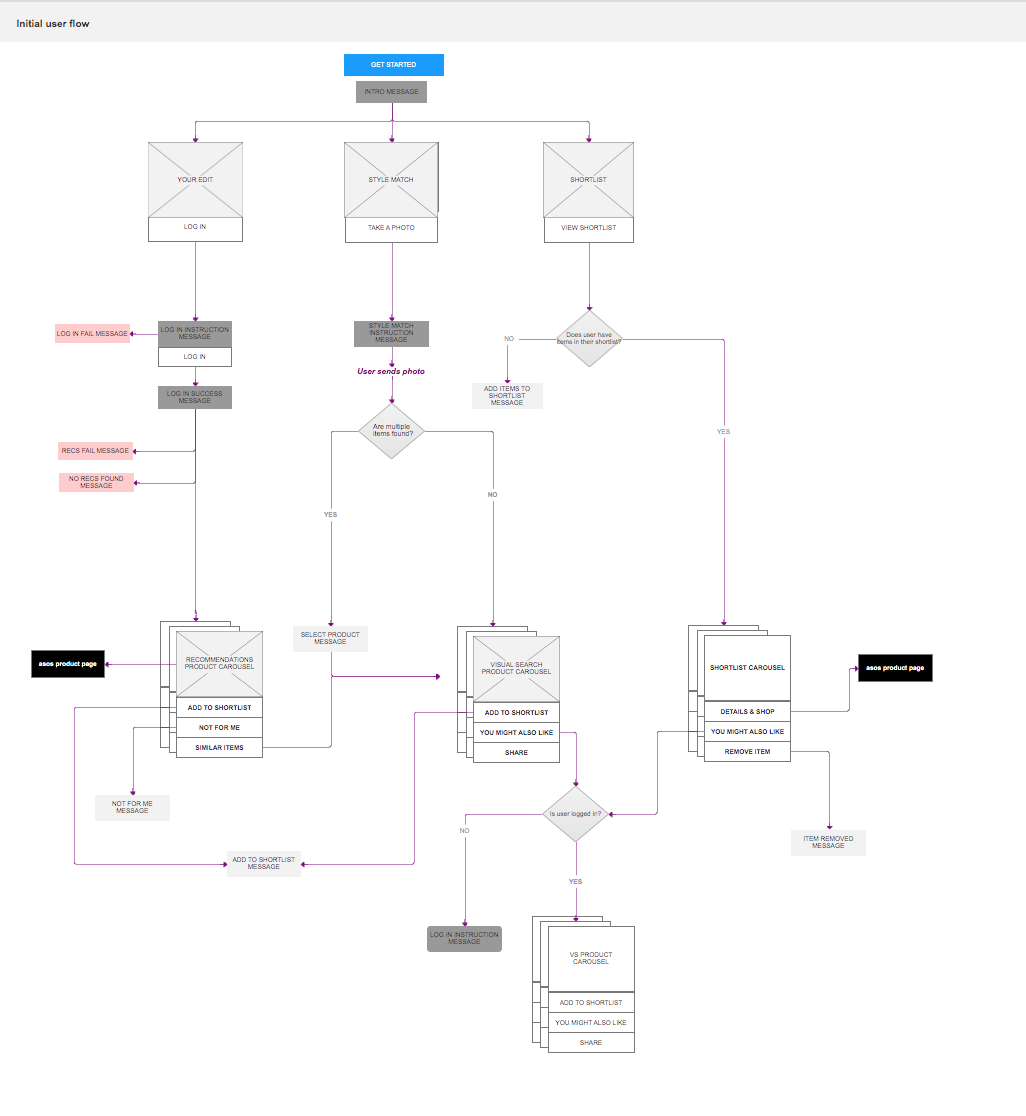
When people first encounter a chatbot, their expectation was that there would be some level of natural language processing, however, we initially decided to control the chat… although we knew we would be expanding to a more “chatty” function later. So, what was the point of a chatbot without chat?
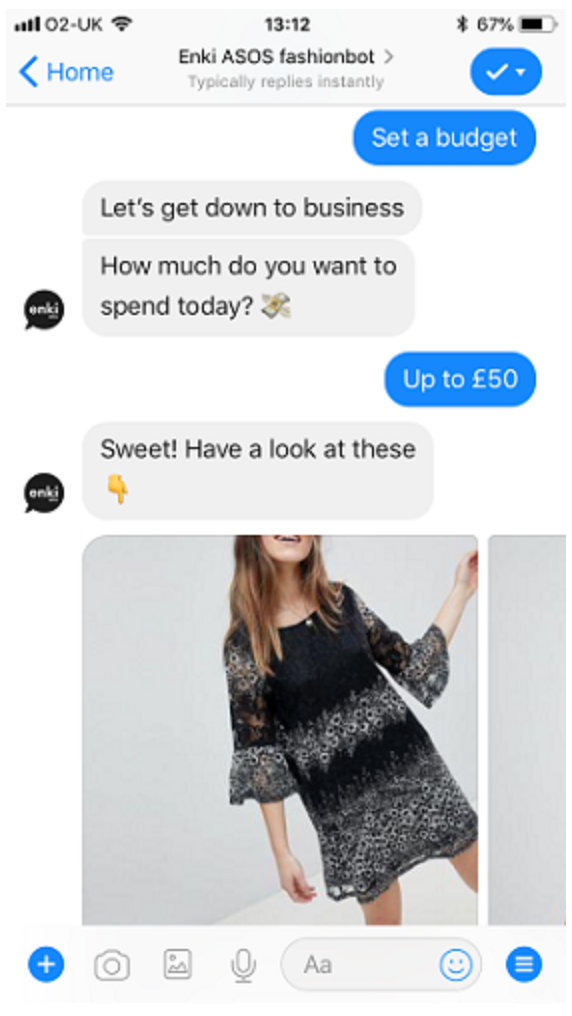
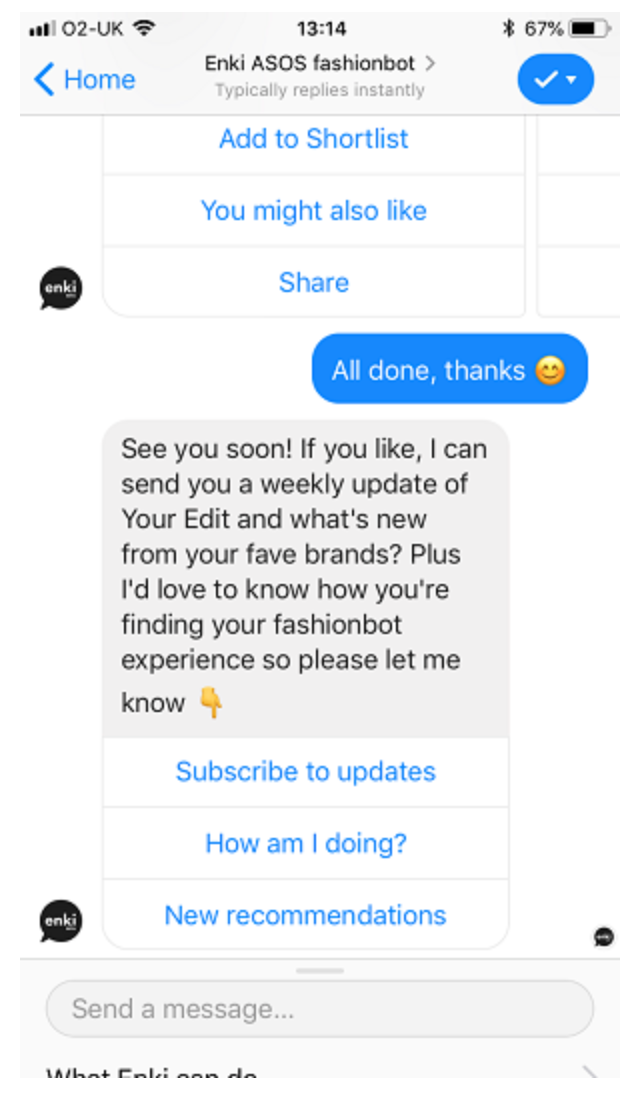
We offered personalised recommendations and the option to send us a pic. The first option, to send personalised recommendations, based on your own shopping style, was a completely personalised “edit”, like a personal shopper for ASOS customers. We allowed users to refine, save to a wishlist and subscribe to a weekly edit, on their choice of day, all within facebook messenger.
The second, allowed you to send a picture, and we would find a similar item on ASOS. As one user put it: “Oh my god, so I can just sneakily pap someone on the tube and Enki will send me a match?”
Yes. Exactly. But no, don’t do that.
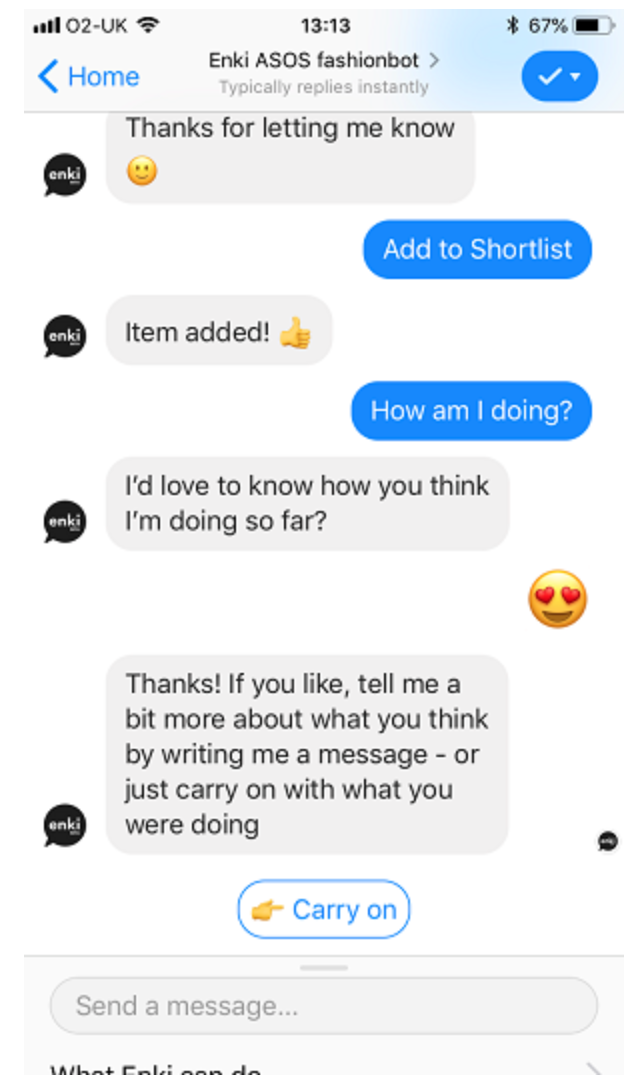
We also added a feedback option with the option of free text so we could collect user feedback from actual users and see what they said when interacting with Enki.
SO WHAT DID USERS ACTUALLY DO?
Scroll happy: We observed them using it a bit like a normal UI, scrolling up and down and often would scroll back up rather than using the quick replies or persistent menu.
Positive Usability: Users generally found it easy to use and picked up functionality quickly without hesitation and they had little trouble finding the features they were looking for.
Expectation mismatch: Some users clicked or type very quickly before Enki has had a chance to respond which led to the journey breaking. Several users clicked on the image instead of the word e.g. log in, show more.
Workarounds: Some users did not notice quick replies and would type in the answer instead, which initially didn’t work but led us to prioritise that as a fast follow feature.
TESTING NLP
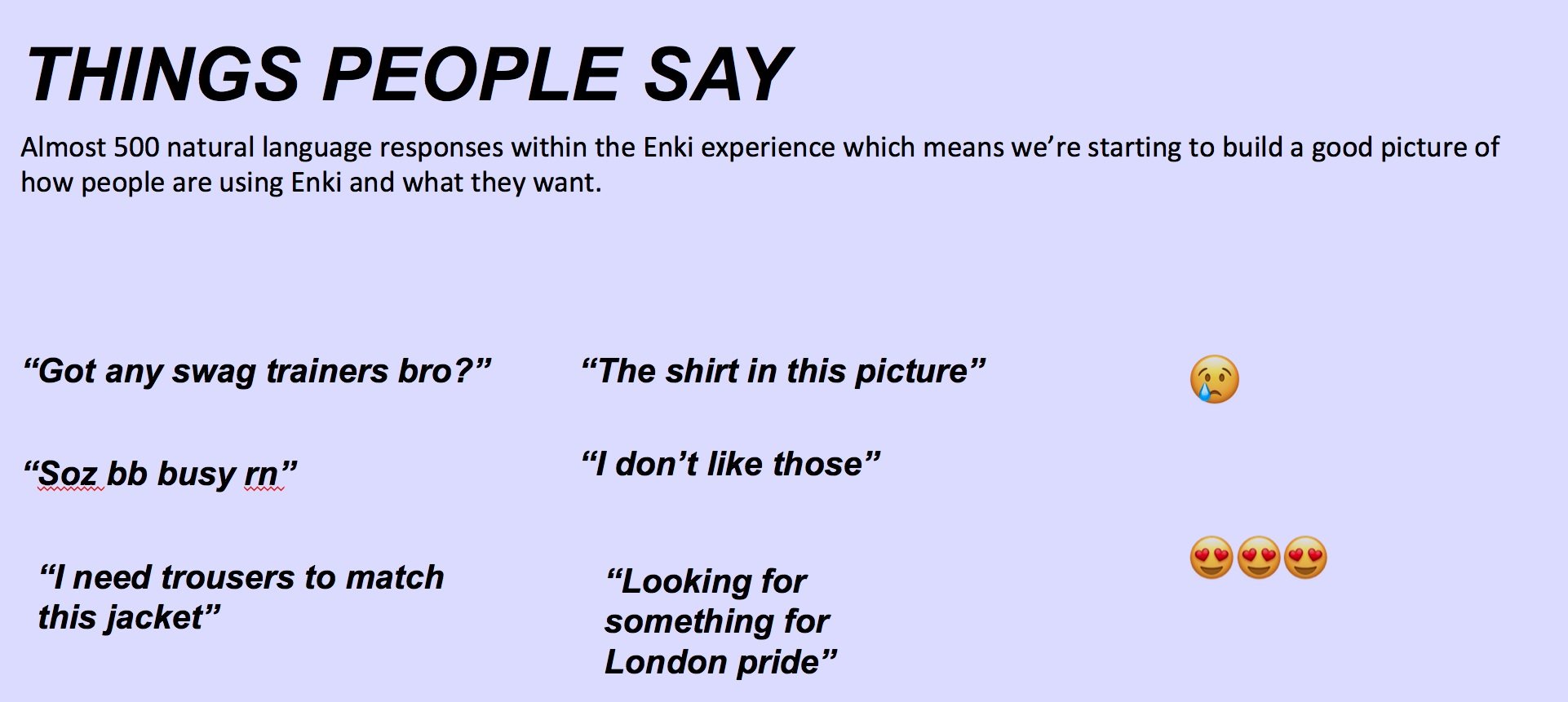
Initially. as we didn’t have the chat option, people still chatted, which gave us real data to work with as a useful starting point to learn from. Once we had refined our natural language processing functionality we added it in.
Writing Styles
Different users has a different way of typing. Some just put in the copy: “black dress” while others wrote in a whole polite message.
Often users put in quite a lot of detail in their first search including size and style
TESTING THE WATERS
“Maybe if I write please she’ll understand me better”
“I’m not sure if Enki understands me”
“I’m not sure how smart she is”
Once they started typing, they had higher expectations of what could be understood and started asking more: what can you do, what do you have type questions.
IMPROVING over time
Unlike an app, a chatbot can get annoying quickly and I wanted to make sure we struck the balance tone of voice wise. We know we’re not you’re real friend, but we’re also not just a cold app interface, so getting that tone right was key and I also needed to make sure it developed over time so, working closely with our devs we developed an ‘evolving’ relationship so we recognised whether this was a first, second or subsequent interaction.
Getting notifications right. In order to keep talking to people, we needed to ask about notifications. We were able to message them again after 24 hours and then never again unless they interacted, which is fair enough – nobody wants spam. So we needed to make sure there was a way for users to continue to interact with Enki if they wanted to. So we set up a weekly edit feature and asked them to pick a day when it would suit them.
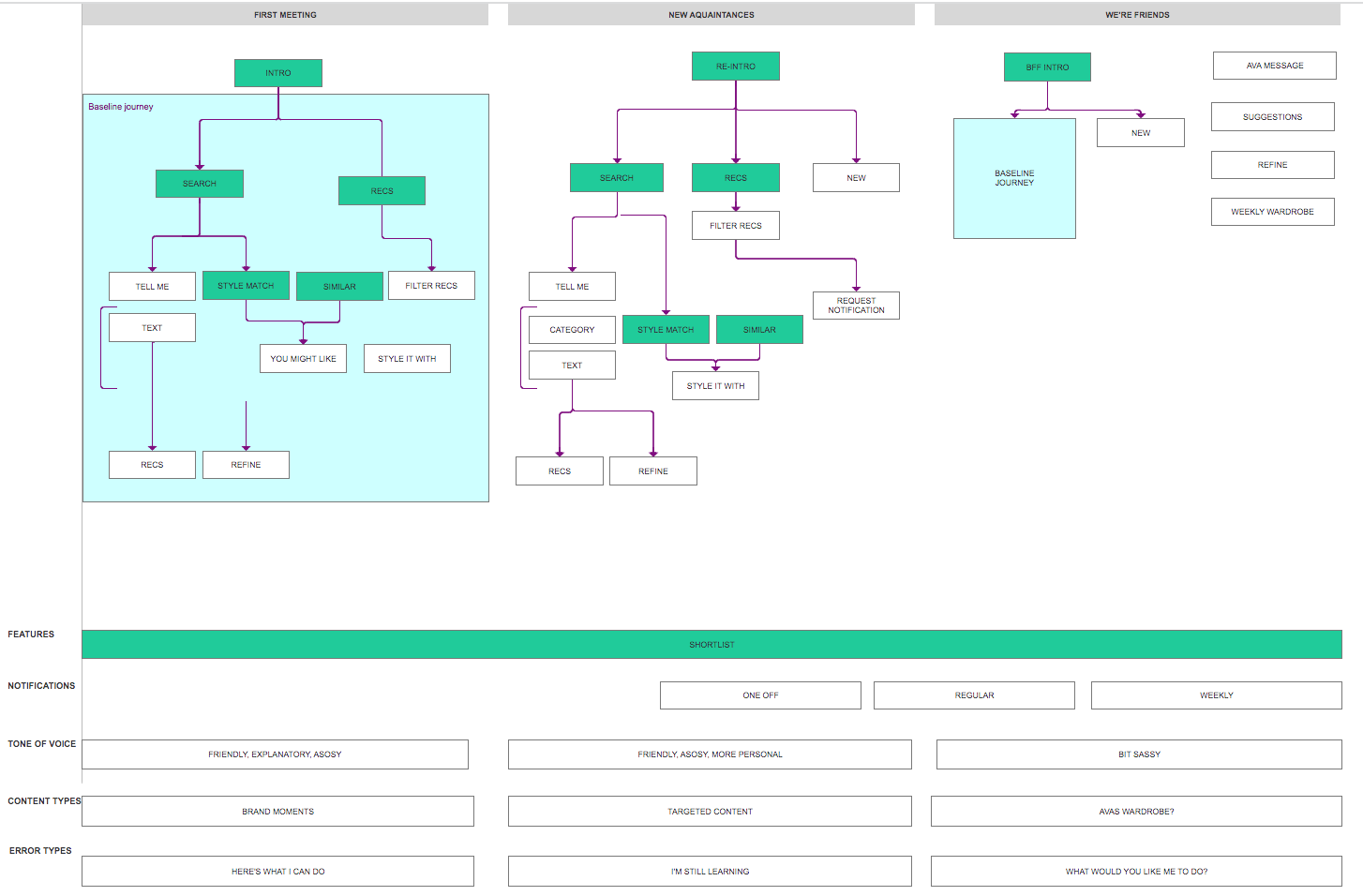
Refining and improving the MVP
Once the initial Enki was out, we worked in a lean way to keep evolving and releasing to the public. We released, refined, designed and tested every two weeks to allow for a lean, fast, feedback-first model. We worked in a small multi-disciplinary Conversational Commerce team and took our learnings onto the next project: voice activated commerce on Google home.
“ASOS looks intent on making its bot good enough to provide real value for users. So far, it has achieved this – I found it both enjoyable and helpful to use.…This, combined with a pretty addictive UX and its handy Style Match feature, makes it the best retail bot I’ve tried so far.”
- Nikki Gilliant, EConsultancy
https://econsultancy.com/why-asos-enki-has-set-the-bar-for-retail-chatbots/
FAIL FAST, LEARN AND MOVE ON
Feedback from the industry and from users was positive but, as this was experimental, we decided that the model was not as useful to business and users. While AI remained in ASOS’s future, we focused on designing better customer care responses and used feedback on the recommendations engine to improve the on-site recommendations experience.